
Integrated Monitoring is a continuous, learning-based management approach in which planning, implementation, monitoring, and improvement happen together rather than as separate activities. It focuses on learning by doing, using evidence and feedback from implementation to improve current and future actions while adapting to changing conditions. This way of management requires a series of different steps:
- Clarify the goals and purpose of the project
- Plan actions and monitoring
- Implement actions and monitoring
- Gather data/evidence and feedback
- Reflect on the findings and evaluate them
- Modify/review actions based on the new knowledge/learning
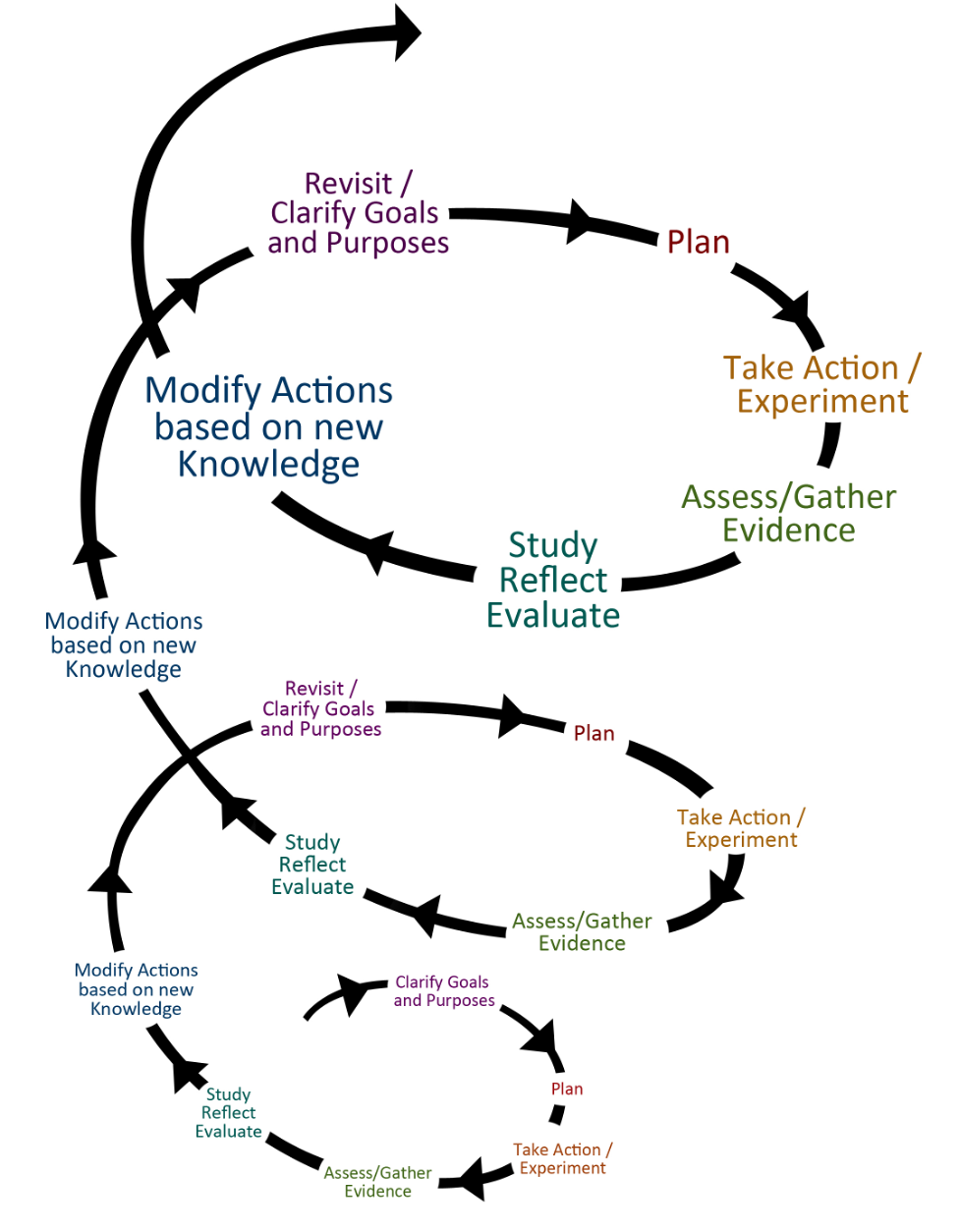
Clarify the goals and purpose of the project
Integrated monitoring begins with a clear understanding of what the project aims to achieve and why. Clear goals, outcomes, and success indicators provide a reference point for both implementation and monitoring. Example: Defining whether a school project aims only to construct buildings or also to improve enrollment and learning outcomes.
Plan actions and monitoring together
Unlike traditional approaches, integrated monitoring designs project activities and monitoring indicators at the same time. This ensures that progress, quality, and outcomes can be measured from the start. Example: While planning construction activities, indicators for quality, timelines, cost, and community satisfaction are also defined.
Implement actions and monitoring simultaneously
Monitoring is not postponed until the end; it happens alongside implementation. Field visits, progress tracking, and quality checks are carried out continuously. Example: Engineers and M&E staff jointly review construction progress and compliance during execution, not after completion.
Gather data, evidence, and feedback
Quantitative data (outputs, costs, timelines) and qualitative feedback (community views, staff observations) are systematically collected. This evidence forms the basis for learning. Example: Collecting site measurements, expenditure data, and beneficiary feedback during project execution.
Reflect on findings and evaluate performance
The collected information is analyzed to understand what is working, what is not, and why. Assumptions are tested, and unintended results are identified. Example: Reviewing whether faster construction compromised quality or whether community involvement improved outcomes.
Modify and review actions based on learning
The final and most critical step is using the learning to improve ongoing or future activities. Plans, methods, and targets are revised to increase effectiveness and impact. Example: Adjusting construction methods, timelines, or community engagement strategies based on monitoring findings.In summary, integrated monitoring is a cyclical and adaptive process that links action with learning. It ensures accountability, improves project quality, strengthens impact, and enables organizations to respond effectively to change while continuously improving performance.
Category: